

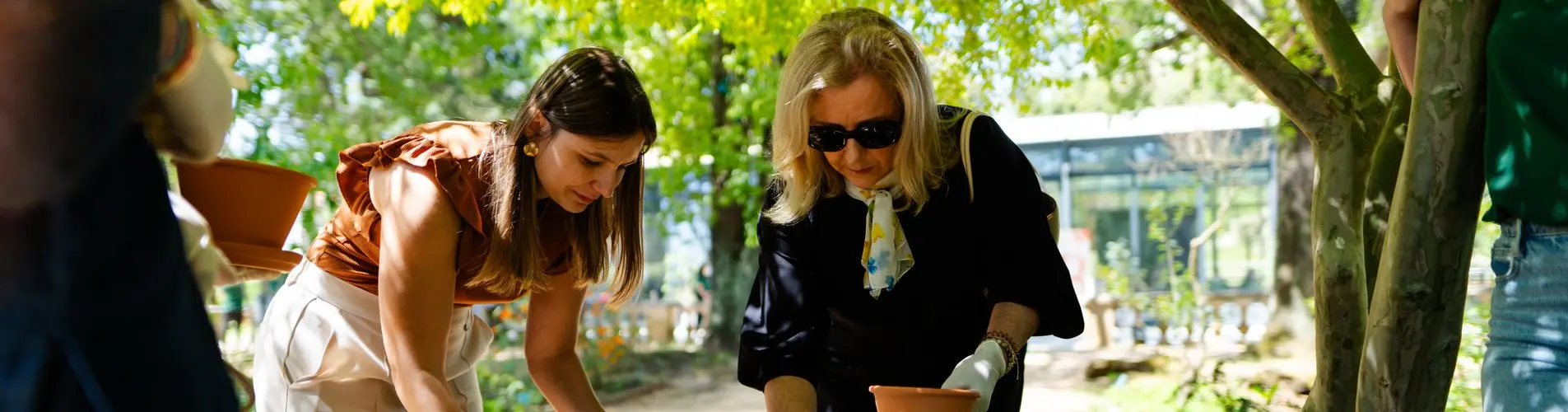
At the end of the event there are photos, enthusiastic comments and a feeling that the team had fun. All of that counts. But for those who manage people and budgets, a harder question remains: what really changed after the team building?
The answer does not need a complex study. It needs to start before the event, with a clear objective and indicators proportionate to the experience. Measuring is not about trying to prove that two hours of activities increased the company's productivity. It is about understanding whether the experience helped the team with what you wanted to work on.
First, choose an observable objective
“Strengthening team spirit” is a good starting point, but still too broad to be assessed. It is advisable to translate that objective into behaviours: do people from different departments talk more? Do new employees feel more integrated? Do participants better understand their colleagues' roles? Were there more collaboration opportunities so that work flows better?
An experience focused on integration calls for different indicators than a recognition activity or a social impact programme. It makes no sense to measure every event with the same grid.

A simple model: before, during and after
Before the event: send an anonymous questionnaire with four to six questions on a scale of 1 to 5. Examples: “I feel comfortable asking colleagues from other teams for help” or “I know well the people I need to collaborate with”. Also record operational data: expected participants, people present and project objectives.
During the event: observe participation, the barriers encountered and the moments when teams cooperated. A good facilitation team can collect qualitative notes without interrupting the dynamic. The aim is not to rate people, but to identify what worked in the programme design.
Right afterwards: ask what participants valued most, whether they felt included and which practice they would like to repeat at work. Avoid long questionnaires, since three well-chosen questions usually bring more useful information than twenty rushed answers.
A few weeks later: repeat two or three of the initial questions and talk to team leaders. If there are improvements, record them; if not, learn from the result. A difference in answers does not, by itself, prove that the event caused the change.
Which indicators make sense?
For integration: participation rate, sense of belonging and new contacts between areas. For collaboration: confidence to ask for help, perceived quality of communication and concrete examples of joint work. For wellbeing: satisfaction with the experience and feeling of inclusion. For social programmes: materials produced, confirmed deliveries and impact documented with the beneficiary partner.
Metrics such as absenteeism, retention or productivity can provide context, but they are influenced by many factors. They should not be attributed directly to a single team building without a more robust assessment.

What to do with the results
Share a one-page summary with the objective, what happened, what participants said and two follow-up actions. You can compare formats over the year to see what best fits the company culture and use that information to improve the next edition, instead of automatically repeating the previous programme.
At Boost Events, the conversation starts with the right question: what does your team need? From there, it is possible to design an experience with clear objectives and a realistic assessment.
Want a team building with purpose and evaluation criteria? Talk to us on our contact page.


