

Há uns anos, um team building com componente de voluntariado era um diferenciador. Uma forma de a empresa mostrar que se preocupava com algo além do negócio. Hoje, essa componente é cada vez mais uma expectativa.
Não de todos os colaboradores, nem de todas as empresas. Mas de uma fatia crescente que inclui os profissionais mais jovens, as empresas com compromissos ESG formais, e as organizações que perceberam que a coerência entre o que dizem e o que fazem tem valor real.
Este artigo explica porque é que o team building com impacto social deixou de ser nicho, o que distingue uma ação com legado real de uma ação simbólica, e que programas existem em Portugal para quem quer fazer a diferença.
De tendência a expectativa: o que mudou
Em 2019, um estudo da Deloitte sobre as prioridades dos Millennials mostrava que 73% preferiam trabalhar em empresas comprometidas com causas sociais. Em 2024, o mesmo tipo de estudo já inclui a Geração Z com percentagens ainda mais altas, e estende a questão além da preferência de emprego para a avaliação contínua da coerência da empresa.
O que isto significa na prática: a empresa que organiza um evento anual com discurso sobre sustentabilidade mas sem nenhuma ação concreta começa a gerar ceticismo interno. E o ceticismo interno é um dos preditores mais fortes de desconexão com a empresa.
O team building com impacto social não é uma resposta a uma tendência. É uma resposta a uma mudança estrutural nas expectativas das pessoas sobre o que as empresas devem fazer com o seu tempo e recursos.
O que distingue impacto real de impacto simbólico
Esta é a questão central para qualquer empresa que queira fazer isto bem.
O impacto simbólico tem características reconhecíveis: a ação acontece num bloco de 45 minutos no meio de um evento de dois dias, não existe parceria com nenhuma organização real, não há seguimento, e o resultado é medido em fotografias e não em beneficiários.
O impacto real tem características igualmente reconhecíveis:
- Existe uma organização parceira verificável que recebe o resultado da ação.
- O impacto é mensurável: número de beneficiários, bens entregues, horas de voluntariado, área intervencionada.
- Há confirmação escrita após o evento com os dados do impacto.
- A atividade está alinhada com ODS ou frameworks de responsabilidade social reconhecidos.
- Os colaboradores conseguem ver o resultado concreto da sua participação.
A diferença entre os dois não está no custo do programa. Está na seriedade com que o fornecedor trabalha com as organizações parceiras e na capacidade de verificar o impacto depois.
O papel da Benévola no ecossistema Boost Experiences Group
A Benévola é a marca do Boost Experiences Group especializada em experiências corporativas com impacto social e ambiental real. Não cria ações simbólicas. Cria legado.
O modelo de trabalho da Benévola é baseado em três princípios: cocriação com organizações parceiras verificáveis, impacto mensurável com confirmação escrita após cada evento, e alinhamento explícito com os ODS das Nações Unidas.
Para empresas que precisam de integrar o impacto dos eventos nos seus relatórios de sustentabilidade, ESG ou responsabilidade social, a Benévola oferece o nível de rigor documental que essa integração exige.
Programas de team building com impacto social em Portugal
Mãos na Terra
Um dos programas mais completos disponíveis em Portugal para empresas que querem impacto ambiental e social em simultâneo. As equipas constroem hortas biológicas comunitárias em escolas, instituições ou bairros, plantam legumes e ervas aromáticas, e aprendem práticas de agricultura sustentável e circular. O impacto é verificável e alinha-se com cinco ODS. Mais informação em Mãos na Terra.
Raízes do Amanhã
Um programa centrado na plantação de árvores e na sensibilização ambiental. As equipas plantam, os ecossistemas regeneram, e o impacto é documentado em termos de CO2 compensado e biodiversidade apoiada. Alinha-se com ODS 13 (Ação Climática) e ODS 15 (Proteger a Vida Terrestre). Detalhes em Raízes do Amanhã.
Grab a Smile (Boost Events)
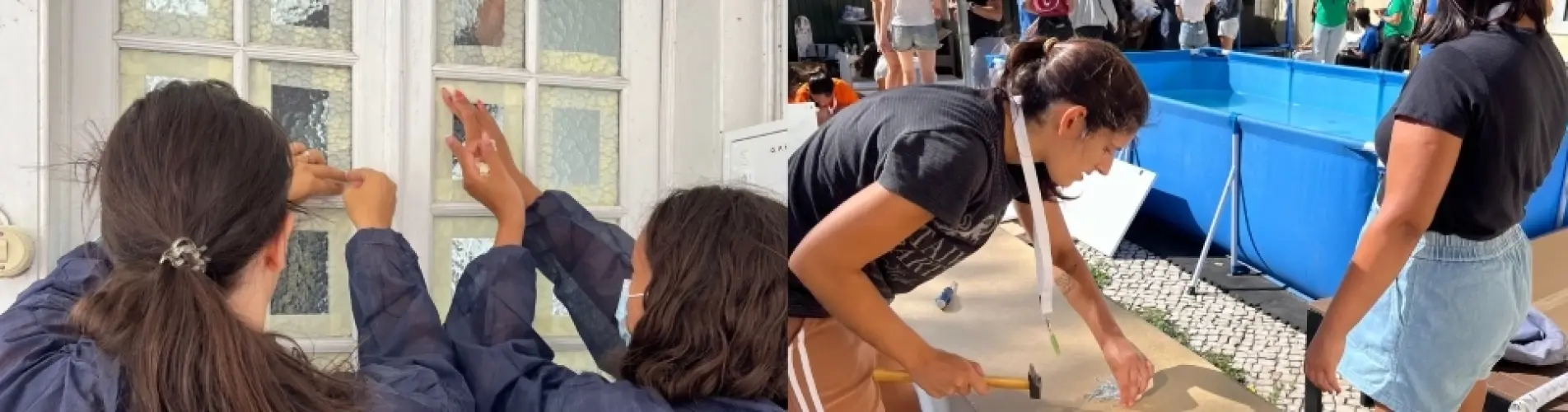
Grab a Smile é um programa de voluntariado corporativo onde as equipas passam meio dia a requalificar uma instituição local: pintura, construção de brinquedos de madeira, jogos no chão ou casas para pássaros. A Boost Events trata de materiais, coordenação e logística. Após o evento, é enviado relatório de impacto com registo fotográfico e confirmação da obra realizada. Para empresas que querem uma ação de responsabilidade social com resultado visível e dados integráveis em relatórios de CSR e ESG.
Construção de Brinquedos (Boost Events)
As equipas montam brinquedos que são depois oferecidos a crianças de instituições locais. A entrega é feita com cerimónia, com uma largada de balões com mensagens escritas pelos participantes. Um dos programas com maior impacto emocional imediato e memória mais duradoura, especialmente eficaz como momento de encerramento de eventos corporativos de maior dimensão.
Clean Up Day (Boost Events)
As equipas limpam zonas previamente escolhidas, com kit completo incluído e certificado de impacto no final. Para empresas que querem impacto ambiental direto com resultado verificável e facilidade de integração em relatórios de sustentabilidade. Mais em Clean Up Day.
One Tree at a Time (Boost Events)
Cada participante planta, limpa e cuida da natureza com orientação especializada, e recebe certificado individual com o impacto da sua ação. Para empresas que querem envolvimento individual verificável com impacto ambiental mensurável. Detalhes em One Tree at a Time.

O impacto nas equipas: o que os estudos mostram
Para além do impacto externo, os programas de team building com componente social têm efeitos específicos nas dinâmicas internas que vale a pena documentar.
Estudos sobre voluntariado corporativo mostram consistentemente que equipas que partilharam experiências de impacto social têm níveis de coesão e confiança interpessoal mais elevados nas semanas seguintes, em comparação com equipas que partilharam experiências de entretenimento de qualidade equivalente.
A razão é relativamente simples: quando as pessoas trabalham juntas por uma causa que vai além delas, a dinâmica de grupo muda de uma forma que o simples divertimento não consegue replicar. Não há hierarquias que façam sentido quando toda a gente está a plantar uma árvore ao mesmo tempo.
Há também um efeito de orgulho institucional. Colaboradores que participaram num evento com impacto social verificável têm maior probabilidade de mencionar o evento como exemplo da cultura da empresa em conversas externas. Isso tem valor de employer branding que é difícil de quantificar mas fácil de reconhecer.
Como comunicar internamente um programa de team building com impacto social
Um dos erros mais comuns é não comunicar o impacto depois. O programa acontece, as fotos ficam boas, e depois não se faz nada com os dados.
Uma comunicação interna eficaz após um programa de impacto social deve incluir:
- Os dados concretos do impacto: árvores plantadas, área limpa, brinquedos entregues, beneficiários apoiados.
- A confirmação da organização parceira, se disponível.
- Um ou dois momentos humanos do dia, contados por participantes, não pela empresa.
- Uma referência ao alinhamento com os valores ou compromissos ESG da organização.
Esta comunicação não deve ser um comunicado formal. Deve ser uma história. E as histórias mais eficazes são as que as próprias equipas contam.
FAQ - Perguntas frequentes sobre team building com impacto social
O que é team building com impacto social?
Como escolher entre um programa de impacto ambiental e um de impacto social?
Qual a duração típica de um programa de team building com impacto social?
Pronto para criar um programa de team building com impacto real?
A Benévola e a Boost Events trabalham juntas para criar programas de impacto social e ambiental que as equipas recordam e que os relatórios ESG documentam. Fala connosco aqui e conta-nos os teus objetivos.


